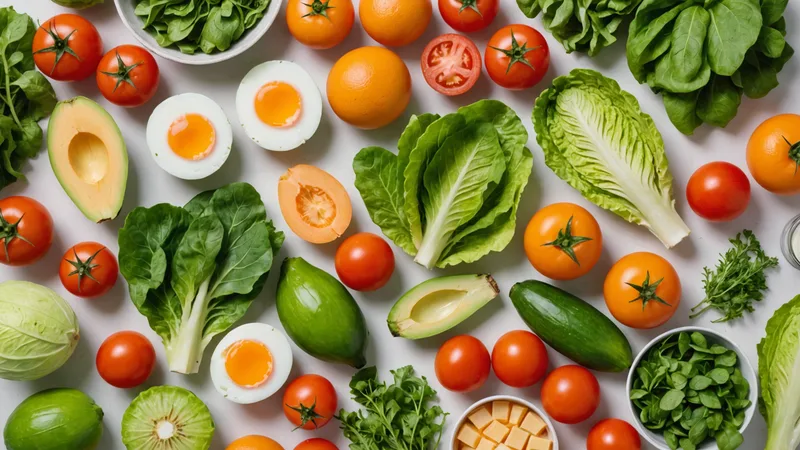
FDA's Food Traceability List, published as part of the FSMA Section 204 final rule in November 2022, established which foods are subject to enhanced traceability recordkeeping under 21 CFR Part 1, Subpart S. The list covers 16 food categories that FDA identified as high-risk based on outbreak history, severity of illness, and the likelihood that enhanced traceability would support faster response during a recall event. If your product is on this list, or if your product contains ingredients drawn from this list, the enhanced KDE requirements apply to your operation.
This post walks through each covered category, what it means in practice, and the questions ingredient-driven manufacturers should ask about their supply chains.
The 16 Food Traceability List Categories
The Food Traceability List is organized by food type. The full list, as published in the final rule and FDA's accompanying guidance, covers the following categories:
Fresh leafy greens are the category with the most public recall history. Romaine, spinach, mixed greens, kale, and other leafy greens consumed raw are covered. Note that the "fresh" qualifier matters: if you are processing leafy greens through a kill step that achieves a 5-log reduction (as in a heat treatment), the post-kill-step product may not carry the same coverage as the pre-kill-step input, depending on how the food is subsequently handled and sold.
Fresh herbs including cilantro, basil, parsley, and related fresh-cut herbs are covered. Dried herbs are not. This distinction catches processors who use both forms of the same herb depending on season and availability.
Cucumbers as sold fresh for raw consumption are on the list. Pickled cucumbers are excluded.
Melons, specifically cantaloupes, honeydews, and watermelons, are covered as whole and cut fresh melons. The rind-to-flesh contamination pathway that has driven multiple listeria outbreaks is the primary risk basis here.
Peppers, both fresh hot peppers and fresh sweet peppers consumed raw. Processed pepper products such as dried or canned are not covered under this category.
Sprouts of any variety, including alfalfa, bean, clover, and radish sprouts. Sprouts remain one of the highest-risk fresh produce categories per FDA outbreak data.
Tomatoes as sold fresh for raw consumption, including roma, cherry, and grape tomatoes. As with other covered categories, significant processing that changes the food's form may affect coverage.
Shell eggs as sold for human consumption. This is a significant category for prepared-food manufacturers who use shell eggs as a recipe ingredient, because the entire shell egg supply chain from farm to processor is covered.
Nut butters, including peanut butter, almond butter, and other ground nut spreads. The nut butter category has driven major recalls due to salmonella outbreaks linked to processing facilities.
Deli salads, meaning ready-to-eat salads prepared on-site or off-site containing various ingredients and sold refrigerated. This is a particularly complex category because the traceability obligations follow each covered ingredient within the deli salad, not just the finished product.
Ready-to-eat deli meats, including sliced deli meats, hot dogs, and other ready-to-eat processed meat products that are not cooked by the consumer prior to eating. This category carries listeria risk from processing environments.
Finfish, including fresh and frozen finfish intended for raw consumption (sushi, sashimi, ceviche). This category extends to aquaculture-raised species sold for raw use.
Smoked finfish as a separate category from fresh finfish, due to the distinct supply chain and outbreak pattern (primarily listeria in cold-smoked salmon).
Crustaceans, specifically shrimp, crab, and lobster in ready-to-eat forms. Frozen raw shrimp intended for cooking may have different coverage than thawed ready-to-eat shrimp sold at retail.
Bivalve molluscan shellfish, including oysters, clams, mussels, and scallops in raw or partially processed form. This is an existing heavily regulated category with shell stock tags and dealer certification systems, but FSMA 204 adds KDE requirements beyond those existing systems.
Fresh-cut fruits and vegetables as a broad catch-all for any fresh fruit or vegetable that has been cut, sliced, diced, shredded, or otherwise processed in a way that exposes interior tissue, whether or not the source ingredient appears elsewhere on the Food Traceability List. This category has broad implications for salad kit manufacturers, fresh-cut processors, and food service suppliers.
When an Ingredient Is Covered Even If Your Finished Product Is Not
One of the most common points of confusion for prepared-food manufacturers is whether FSMA 204 coverage attaches to ingredients or to finished products. The answer is: it attaches to covered foods as they move through the supply chain. If you purchase fresh leafy greens as an ingredient for a prepared salad kit, the leafy greens are covered as they flow through your facility, even if your finished salad kit is not itself listed as a covered food category.
This means that a manufacturer of frozen entrees that uses fresh spinach as an ingredient must maintain lot-level traceability records for that spinach through its receiving, transforming, and creating CTEs. The records obligation follows the ingredient, not just the final product classification.
This is not a hypothetical edge case. A typical prepared-foods manufacturer working with fresh produce ingredients may have 10 to 20 covered ingredients flowing through their facility simultaneously, each with its own KDE set and CTE record requirements. Tracking each of those ingredients at the lot level, without a dedicated traceability system, creates a documentation burden that is hard to sustain accurately at speed.
Questions to Ask About Your Ingredient Supply Chain
If you purchase covered ingredients from upstream suppliers, your traceability obligations depend in part on whether those suppliers are providing you with the correct KDEs. For each covered ingredient you receive, you need the traceability lot code, the quantity and unit of measure, the date of receipt, the location of the immediate previous source, and the reference document identifier that links your receiving record to the supplier's shipping record. If a supplier is sending you invoices or COAs that do not include a traceability lot code, your own receiving CTE record cannot be complete.
The practical questions to ask your suppliers are: do they have a documented lot coding system that meets the FSMA 204 KDE requirements? Do their certificates and shipping documents include the traceability lot code as a labeled field? Can they produce the KDE record for a specific lot within 24 hours if asked? If the answers are uncertain, that is a gap worth addressing in your supplier onboarding process before an FDA records request forces the issue.
Not All Exclusions Are Obvious
The Food Traceability List also has exclusions that are worth knowing. Foods that receive a "kill step" that achieves a validated pathogen reduction may be excluded from coverage for the post-kill-step form of the food, though the pre-kill-step ingredient is still covered. Farms that are subject to the Produce Safety Rule and are below certain sales thresholds have different applicability timelines. Food that is not intended for human consumption is excluded. And as noted, processing that fundamentally transforms a covered food (dehydration, canning, cooking to a defined endpoint) may change the coverage analysis.
We are not providing legal or regulatory advice here, and if your operation has unusual products or processes, a qualified food safety consultant's opinion on coverage is worth obtaining. What we are pointing to is that the coverage analysis is not always as simple as "is this product on the list." The form, processing history, and intended use of the food all affect the analysis.
Starting Your Coverage Assessment
The first practical step is building an ingredient-level inventory of what you purchase and whether each item falls into a covered category. For each covered ingredient, map out which CTEs apply to your operation's handling of that ingredient: receiving, transforming (if you cut, mix, or combine it), creating (if it becomes a component of another product), shipping, and cooling if applicable. Then assess whether your current records for each CTE include the required KDEs. Gaps in that assessment are where FSMA 204 compliance work needs to start.
The Food Traceability List is not going to shrink. FDA's public statements suggest that the list may expand over time as outbreak data supports the inclusion of additional food categories. Investing in a traceability system that handles the current list well positions your operation to absorb future additions without starting over.